How to write a storekeeper CV
A CV, also called a resume in many job adverts, should explain the experience you can truthfully bring to this role.
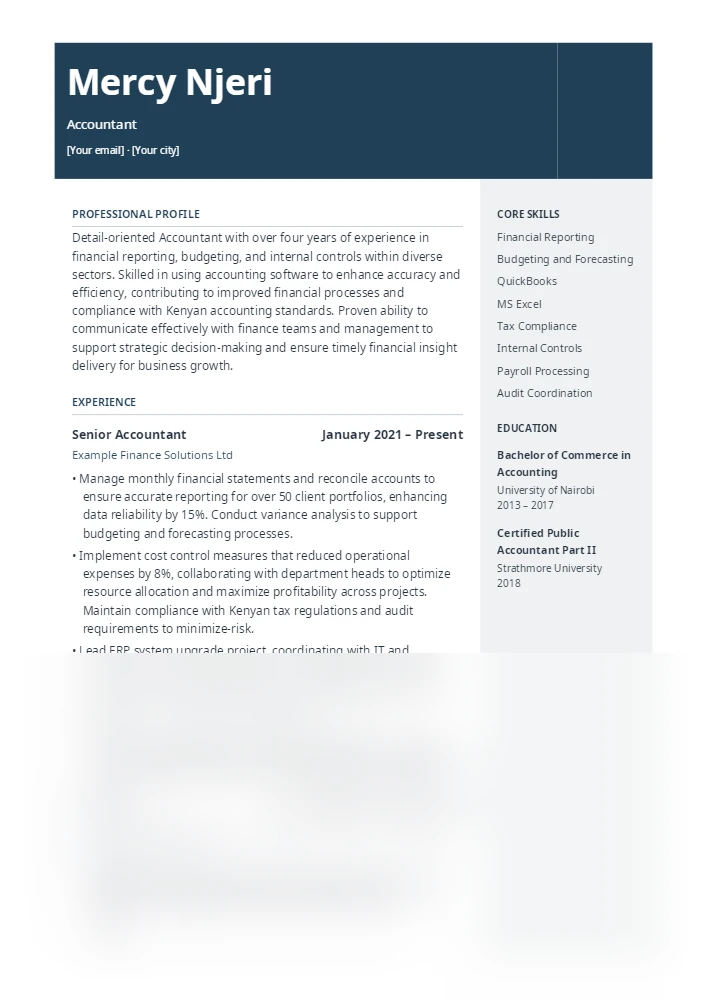
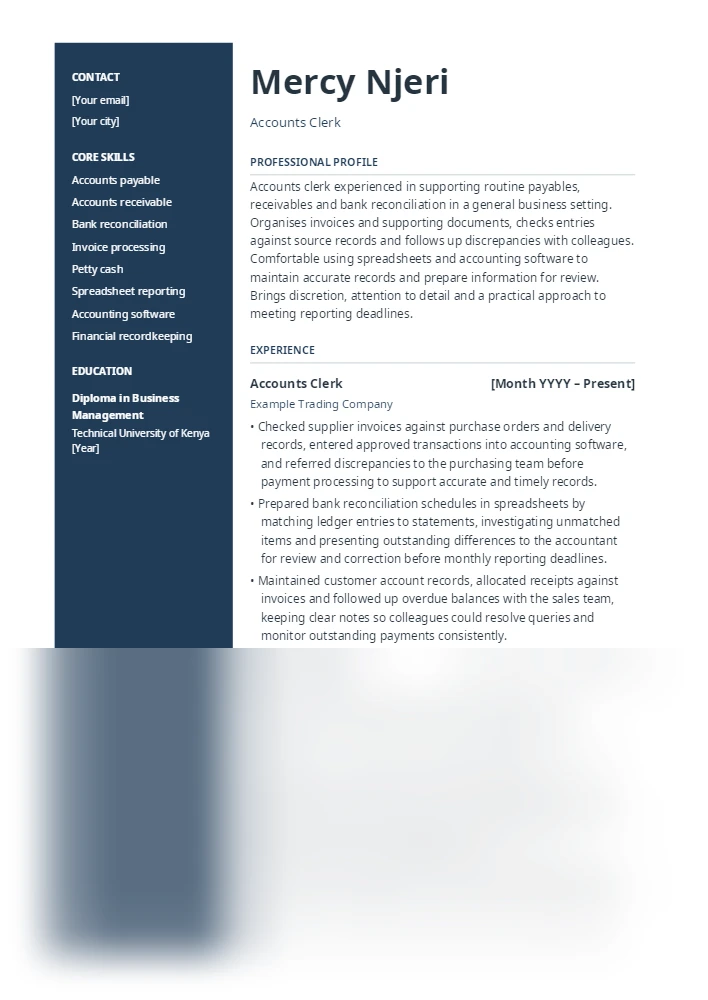
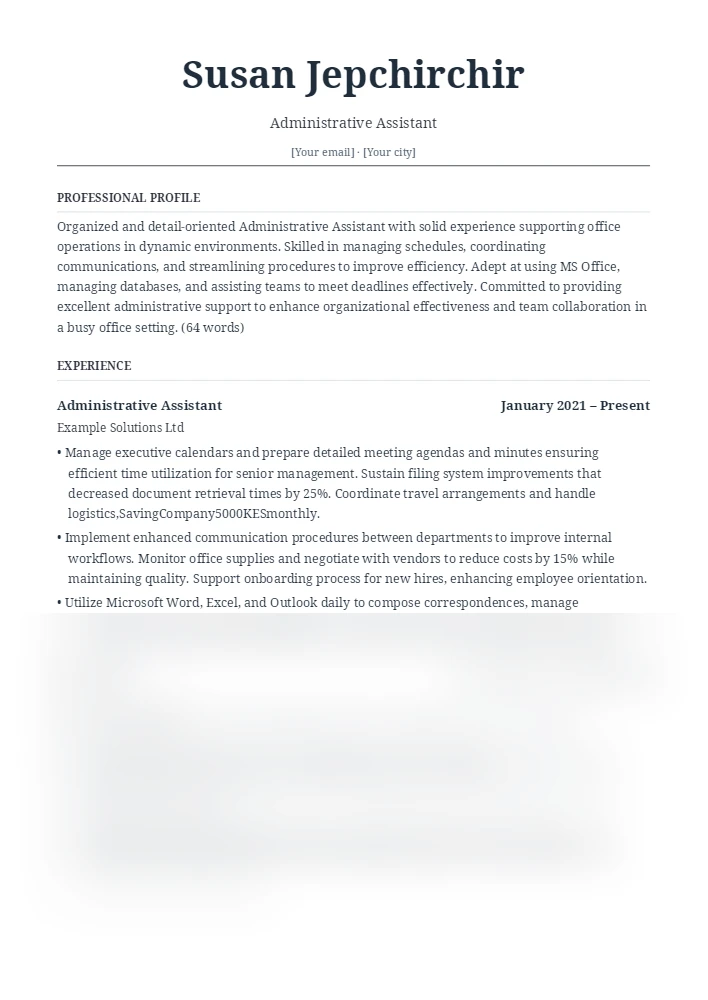
A storekeeper CV should show how you receive, safeguard, record and issue stock while keeping information reliable for the people who depend on it. Employers may value evidence of stock counts, discrepancy investigations, careful documentation and communication with purchasing or operations teams. The most useful details reflect the type of goods and systems in the advertised role, whether these involve general supplies, spare parts or perishable items. This fictional example suits a jobseeker with practical stores experience who wants to present responsibilities alongside their purpose and outcomes. Its employers, duties and qualification are illustrative, not a real applicant's history or verified credentials.
Replace the fictional employers, roles, duties and dates with your own accurate history. Use only qualifications and institutions you genuinely attended; the education entry is an illustration, not a verified credential. If you add a stock accuracy figure or other result, check that you can explain its source and your contribution. Compare the advert with your experience, then emphasise relevant goods, systems and procedures without claiming skills you have not used. If your experience is limited, describe a placement, volunteer stockroom or relevant project and explain what you actually did. Remove any example detail that does not apply.
Write a relevant professional profile
Start with your storekeeping background and the kind of stock or operation you know. Add two or three relevant strengths, such as receiving goods, reconciling balances or maintaining safe storage, and mention a system only if you have used it. Close with how your work supports accurate records or reliable supply. Keep the profile consistent with the evidence in your experience section and avoid claims of expertise you cannot explain.
Storekeeper with experience receiving, issuing and tracking supplies in busy stores. Maintains accurate stock records, checks deliveries against purchase documents and supports regular stock counts. Comfortable using spr…
Illustrative wording from the fictional sample. Use your own facts.Present your experience and achievements
- Describe the receiving process from checking orders and delivery notes to recording accepted goods. Explain how you dealt with shortages, damaged packaging or differences in quantity and who you informed.
- Give an example of a physical stock count or reconciliation. Identify the records you compared, how you investigated a discrepancy and what you did to correct or escalate it.
- Show how you processed authorised issues and maintained a record of stock movements. Mention the inventory software or spreadsheet methods you used and how your records helped colleagues locate or replenish supplies.
For each role, show the employer, job title and dates accurately. Distinguish employment from attachments, volunteering and coursework. Use numbers only when you can support them.
Skills to consider for this role
Select skills you can demonstrate and match them to the employer’s advert. Explain important skills through examples of your work.
- Inventory control
- Stock reconciliation
- Goods receiving
- Stock rotation
- Inventory systems
- Spreadsheet reporting
- Document control
- Safe stock handling
Organise your education and training
List your genuine qualification, institution and completion date or expected completion date. Relevant studies may include supply chain, procurement, logistics or business, but a particular qualification is not universal for storekeeping roles. You can also include practical training in inventory systems, stock handling or workplace safety when it is relevant and accurately described. Include a current professional credential only if you hold it, and check the advert for any specific requirements.
List qualifications and licences you actually hold, using the correct institution and award names. Check any professional registration requirements in the specific advert.
Common mistakes to avoid
- Listing stock control as a skill without explaining how you recorded movements, counted items or resolved discrepancies in practice.
- Claiming familiarity with an inventory system because it appears in the advert, even though you have never used it.
- Reporting a stock accuracy improvement without a reliable basis or suggesting that a team result was entirely your own work.
Make this CV relevant to your application
- Identify the goods you handled and explain any relevant storage needs, such as expiry monitoring, secure access or protection from damage.
- Show how you checked purchase orders, delivery notes and physical quantities before accepting stock, including how you reported discrepancies.
- Describe the inventory system or spreadsheet functions you actually used, such as updating balances, filtering records or preparing count sheets.
- Explain how you controlled stock issues, including authorisation, documentation and communication with the teams receiving materials before updating inventory records.
Before you send your CV
- Check that every employer, role, date and qualification describes your own genuine history and experience.
- Confirm that the goods, inventory tools and stock procedures mentioned match work you actually performed.
- Review each result for a reliable source and make your personal contribution clear to the reader.
- Compare the CV with the advert and correct spelling, contact placeholders and inconsistent dates before applying.
Follow the employer’s requested file format, filename, reference, application channel and deadline. Check that the document opens correctly and contains readable text. No template guarantees an applicant tracking system result.
Storekeeper CV questions
How can I write a storekeeper CV with limited experience?
Use a placement, volunteer role, academic project or other relevant activity if it demonstrates stock handling or record keeping. Name the activity honestly and describe your own tasks, such as counting supplies, updating a spreadsheet or organising a storage area. Include the purpose of the work without presenting a project as paid employment.
What evidence best demonstrates inventory control skills to an employer?
Describe a specific process you carried out, such as comparing a physical count with inventory records and tracing a difference through issue notes. Identify the tools you used and the action you took. A reliable, explainable result can add context, but a clear account of your method is useful even without a numerical outcome.
How should I adapt this sample for a specific vacancy?
Read the advert for the goods, storage conditions, systems and responsibilities it mentions. Bring your matching experience forward and use the employer's terminology where it accurately describes your work. Replace every fictional detail with your own information, and leave out example duties or qualifications you cannot support. Keep the final document concise and easy to check.
Make the sample your own
Use the structure as a guide, then replace the sample contact details, career history, qualifications and achievements. Keep the finished CV consistent with your cover letter and the employer’s advert.
Fictional CV example. Published . Updated .