How to write a receptionist CV
A CV, also called a resume in many job adverts, should explain the experience you can truthfully bring to this role.
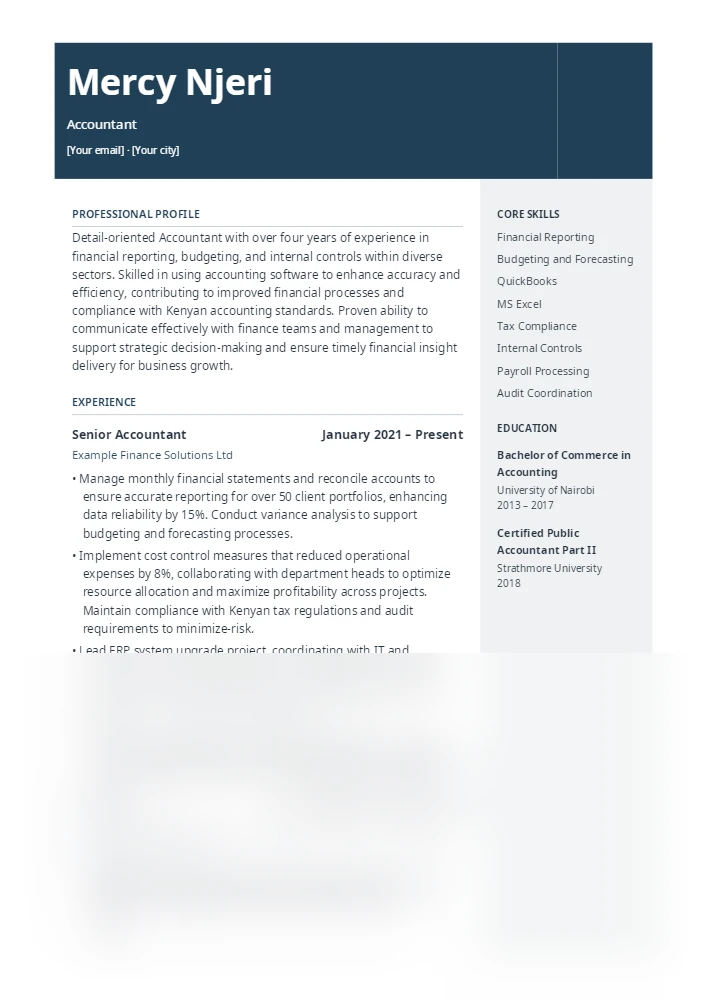
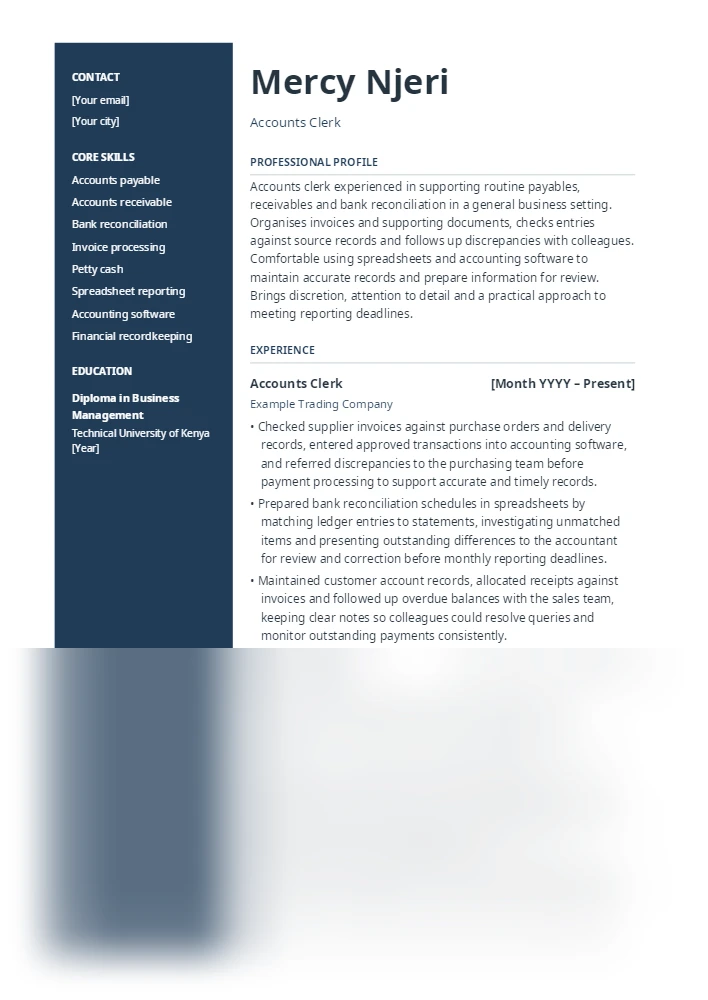
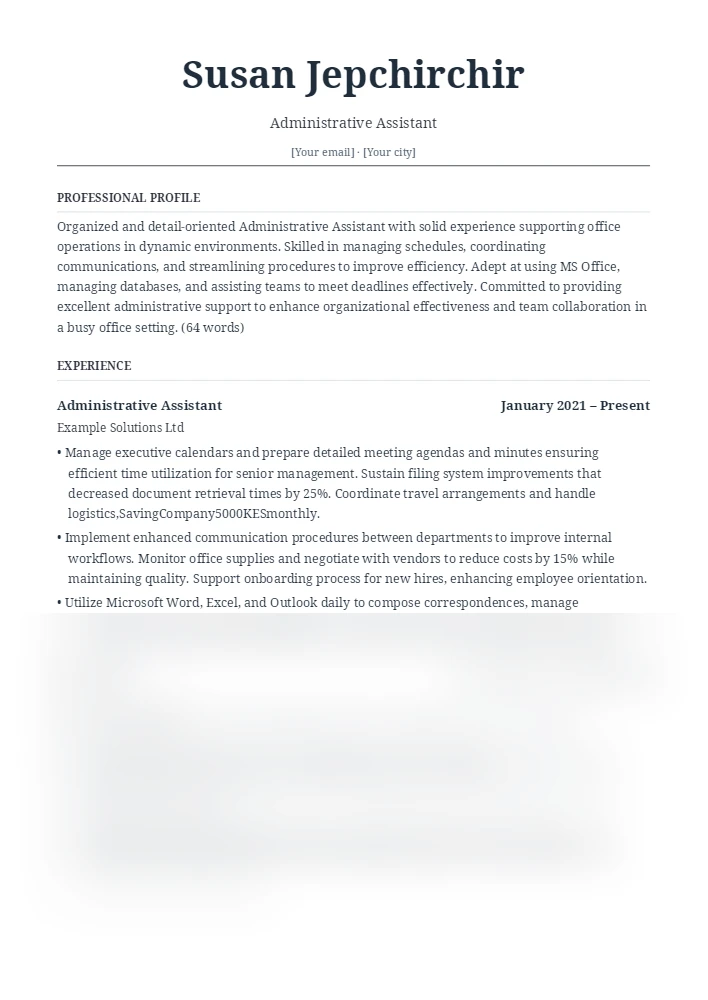
A receptionist CV should show how you welcome visitors, handle enquiries and keep front desk activities organised. Employers may look for evidence of clear communication, reliable scheduling, careful record keeping and discretion when handling personal information. Depending on the workplace, the role can also involve deliveries, meeting rooms and routine administrative support. This fictional example suits a jobseeker with some reception or front desk experience who wants to present practical responsibilities and results clearly. The roles and education are illustrative, not a real employment history or verified credentials. Use the structure as a starting point and adapt the content to your own background and the vacancy.
Replace the fictional employers, duties and dates with your own accurate work history. Change the sample qualification and institution to genuine education or training; the example does not establish that the applicant attended the named institution. If you add figures, use only results you can explain and support. Read the advert for its specific reception duties, working environment and software, then emphasise relevant experience without claiming skills you do not have. If your experience is limited, include a placement, volunteer role or project that demonstrates communication, scheduling or administrative work, and label it clearly.
Write a relevant professional profile
Open with your reception or customer service background and the type of environment you know, such as an office or service centre. Select two or three strengths that match the vacancy, for example visitor support, call handling and appointment coordination. Add a practical detail about the tools or records you manage, and describe your approach to confidentiality. Avoid broad claims about being exceptional; let the experience section provide supporting evidence.
Receptionist with experience supporting busy office front desks, welcoming visitors and coordinating appointments. Confident handling telephone enquiries, maintaining accurate visitor records and directing requests to th…
Illustrative wording from the fictional sample. Use your own facts.Present your experience and achievements
- Describe how you greet visitors, confirm their appointments and notify hosts. If you also manage access procedures, explain your actual responsibilities without implying that you make security decisions beyond your role.
- Explain how you handle calls and email, including taking messages, routing enquiries and following up. Show how your approach helps colleagues respond accurately and keeps callers informed when answers are not immediately available.
- Give an example of using a shared calendar or office application to coordinate appointments or meeting rooms. Explain how you checked availability, communicated changes and kept records accurate.
- If you handled confidential records or deliveries, describe the controls you followed and who received escalations. Avoid including names, private information or details that would disclose an employer's security arrangements.
For each role, show the employer, job title and dates accurately. Distinguish employment from attachments, volunteering and coursework. Use numbers only when you can support them.
Skills to consider for this role
Select skills you can demonstrate and match them to the employer’s advert. Explain important skills through examples of your work.
- Visitor reception
- Telephone handling
- Appointment scheduling
- Email correspondence
- Calendar management
- Records management
- Microsoft Office
- Customer service
- Confidentiality
Organise your education and training
List genuine qualifications with the institution and completion date, or expected completion date if you are still studying. Include relevant short courses in office administration, customer service or computer applications when they add useful evidence. If an advert requests a particular credential, present it accurately and check that it is current where applicable. The qualification and institution in this example are illustrative and should not be copied as your own unless they are true.
List qualifications and licences you actually hold, using the correct institution and award names. Check any professional registration requirements in the specific advert.
Common mistakes to avoid
- Listing every front desk duty without explaining how you performed it or how it supported visitors, colleagues or accurate administration.
- Claiming expertise in booking systems or office software based only on brief exposure, making it difficult to discuss practical use.
- Including visitor names or confidential details to illustrate service, rather than describing the situation and your actions without identifying anyone.
- Copying the fictional employer or qualification into your CV, which presents sample information as though it were your own history.
Make this CV relevant to your application
- Describe how you handle calls and visitors together, including the way you prioritise urgent requests without leaving others uninformed.
- Name calendar or office software you have actually used, and explain a task you completed with it, such as booking meeting rooms.
- Show discretion through a practical example, such as limiting access to visitor records or passing sensitive enquiries to the right person.
- Match your examples to the workplace: a busy office may value meeting coordination, while another setting may emphasise visitor enquiries.
- Mention languages you can use professionally when relevant, and describe your proficiency accurately rather than listing languages you cannot confidently use.
Before you send your CV
- Check that every employer, role, qualification and date reflects your actual background and can be explained.
- Compare your reception and administrative examples with the specific duties listed in the job advert.
- Confirm that software and language skills reflect your current ability and practical experience using them.
- Remove confidential visitor details and replace the contact placeholders with your preferred application contact details.
- Proofread names, dates and formatting, and ensure each experience entry describes a distinct role.
Follow the employer’s requested file format, filename, reference, application channel and deadline. Check that the document opens correctly and contains readable text. No template guarantees an applicant tracking system result.
Receptionist CV questions
How can I write a receptionist CV with limited experience?
Use a placement, volunteer role, school project or customer service activity that genuinely involved communication or organisation. Label it accurately and explain what you did, such as answering enquiries, arranging appointments or keeping records. Include relevant training and software skills you can demonstrate. Do not present informal experience as paid employment.
What evidence shows that I can manage a busy reception?
Choose examples that show how you prioritised calls, visitors and administrative tasks. Explain the tools or routines you used, such as a shared calendar, message log or handover notes, and describe the outcome where known. You can use a reliable figure if you have one, but a clear account of your actions is also useful.
How should I adapt this example for a different workplace?
Read the advert and identify its main duties, such as booking appointments, receiving deliveries or assisting visitors. Reorder your truthful examples to highlight the closest match and use the employer's terminology where it accurately describes your work. Replace all fictional details, and avoid adding duties or software simply because they appear in the advert.
Make the sample your own
Use the structure as a guide, then replace the sample contact details, career history, qualifications and achievements. Keep the finished CV consistent with your cover letter and the employer’s advert.
Fictional CV example. Published . Updated .